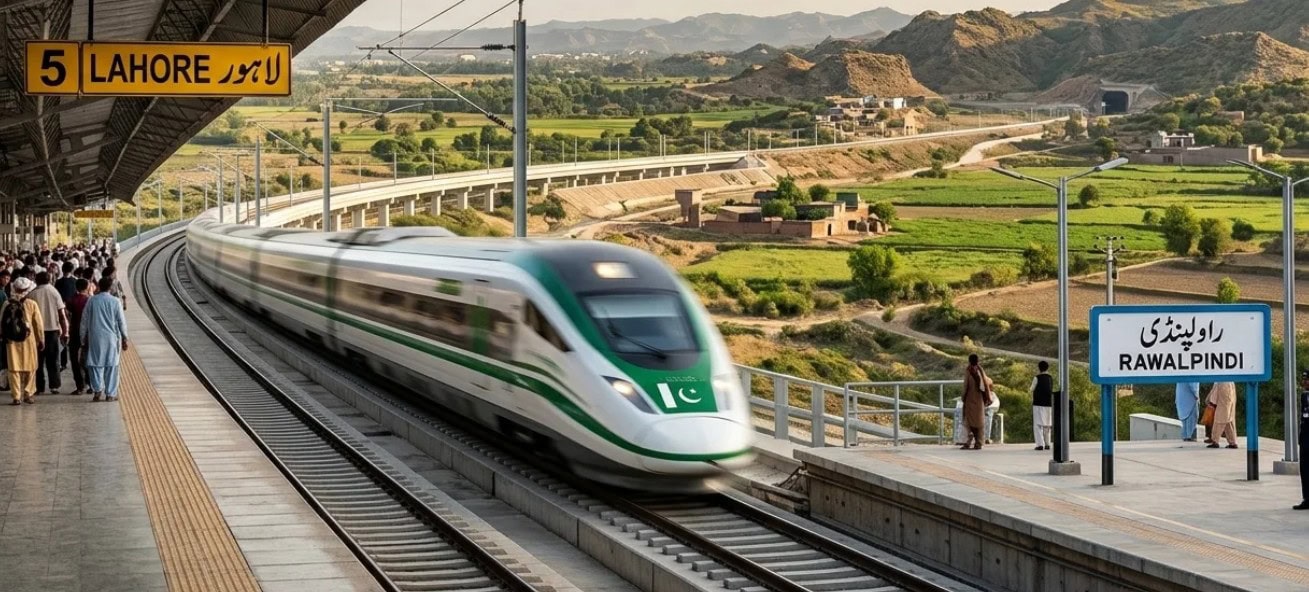
LAHORE – Punjab is set to witness a railway transformation, with a proposed Rs624.97 billion project aiming to connect six major cities through a modernised rail corridor, paving the way for faster journeys and modern stations.
The initiative will link Lahore, Gujranwala, Gujrat, Jhelum, Chakwal and Rawalpindi, creating integrated railway network designed to improve connectivity across the province.
According to project documents, the initial feasibility assessment and planning have already been completed, while the estimated cost of the initiative exceeds Rs624.97 billion. One of project’s biggest highlights is proposed modernisation of the approximately 290-kilometre railway section between Lahore and Rawalpindi. The upgraded track is expected to support train speeds of up to 160 kilometres per hour, improving the potential for faster intercity travel.
Plans also include laying an additional railway line alongside the existing track to strengthen capacity and improve railway operations. Beyond faster trains, the project places considerable emphasis on transforming passenger facilities. A total of 38 railway stations are scheduled for reconstruction and modernisation, with wider platforms and upgraded infrastructure intended to turn them into contemporary transport hubs.
The proposed improvements include automated ticketing facilities and park-and-ride services, allowing commuters to move more conveniently between trains and other modes of transport.
Lahore getting its First Electric Tram next week – Check Routes, Launch details
Also, the government plans construction of overpasses along approximately 50-kilometre railway stretch between Dina and Sohawa. The infrastructure is intended to improve safety and traffic movement around the railway corridor.
The project also proposes introducing advanced European train control technology, a Centralised Traffic Control (CTC) system and fibre-optic communication networks to improve train management, operational efficiency and passenger safety. Security and surveillance infrastructure will also receive upgrades as part of the modernisation programme.
The feasibility assessment examined projected passenger demand, potential revenue generation, and the costs associated with train operations and maintenance to evaluate the project’s long-term financial and economic viability.
About the Author