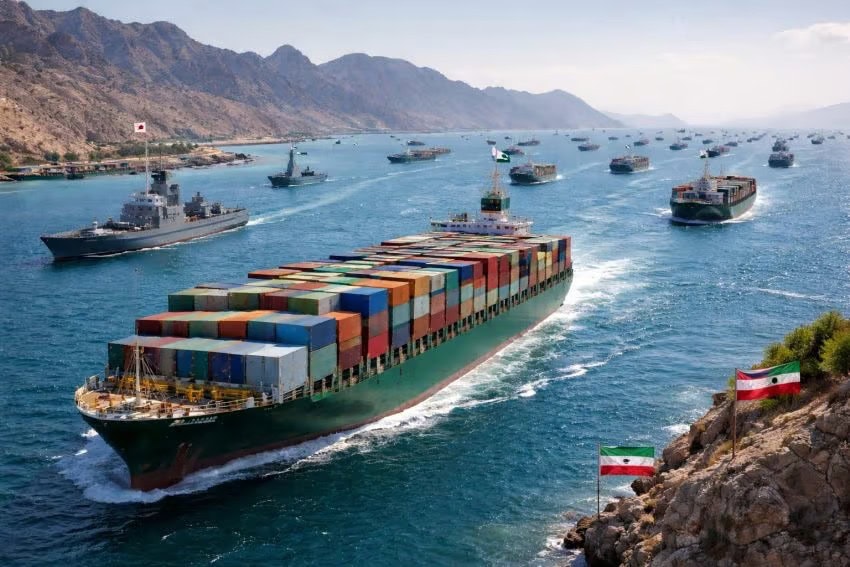
Iranian authorities issued new warning to commercial vessels using the Strait of Hormuz, saying ships that breach its transit regulations could face fines, detention or even seizure during future crossings.
Iran’s Persian Gulf Waterway Management Authority puts international shipping companies and cargo owners on notice as tensions around the strategic waterway remain high.
Iranian authority urged companies moving cargo to or from the Gulf to check an updated list of vessels accused of violating its regulations before chartering a ship. An online platform has also been launched to allow cargo owners and shipping operators to verify whether a vessel has been identified as a violator.
Around 46 vessels have so far been placed on the list over alleged breaches of Iranian maritime rules.
Iran expanded the scope of its warning beyond vessels accused of directly violating its regulations. Ships that cooperate with vessels already on the violators’ list could also be added to the blacklist. This could include ships involved in ship-to-ship cargo transfers, transshipment operations and other similar activities.
The warning means shipping companies could face additional scrutiny not only over their own vessels’ activities, but also over their commercial dealings with other ships operating in the area.
The announcement comes as maritime activity around the Strait of Hormuz faces heightened pressure. Iran established the waterway management authority to monitor and regulate shipping traffic following developments involving the reported closure of the waterway by the United States and a naval blockade of Iranian ports.
Hormuz remains one of world’s most strategically important maritime routes, making any restrictions affecting commercial shipping potentially significant for international trade and regional supply chains.
Oman announced on June 23 that it had established a temporary maritime corridor for vessels seeking to pass through the Strait of Hormuz in cooperation with the United Nations’ International Maritime Organization (IMO).
With Iran tightening its rules and Oman establishing a temporary passage arrangement, shipping operators navigating the Strait of Hormuz are now facing a more complicated maritime environment, where compliance, vessel history and links with other ships could all become critical factors.
US plan to isolate Iran faces Major Roadblock as China keeps Tehran’s Oil Flowing
News Desk
About the Author