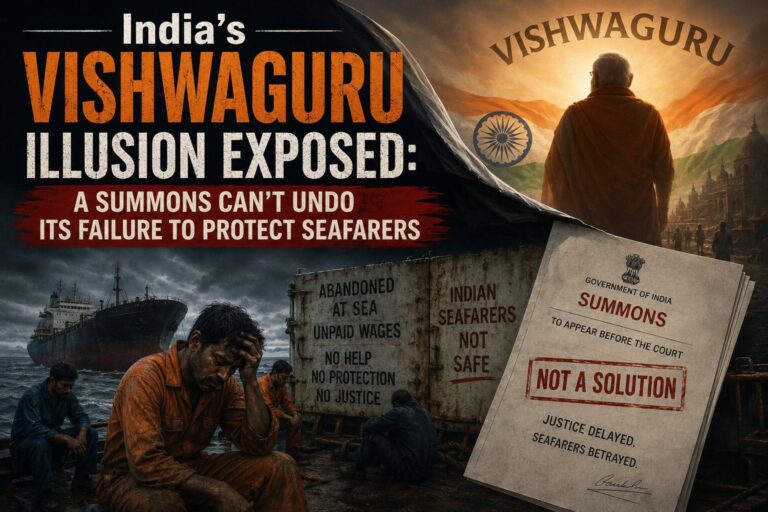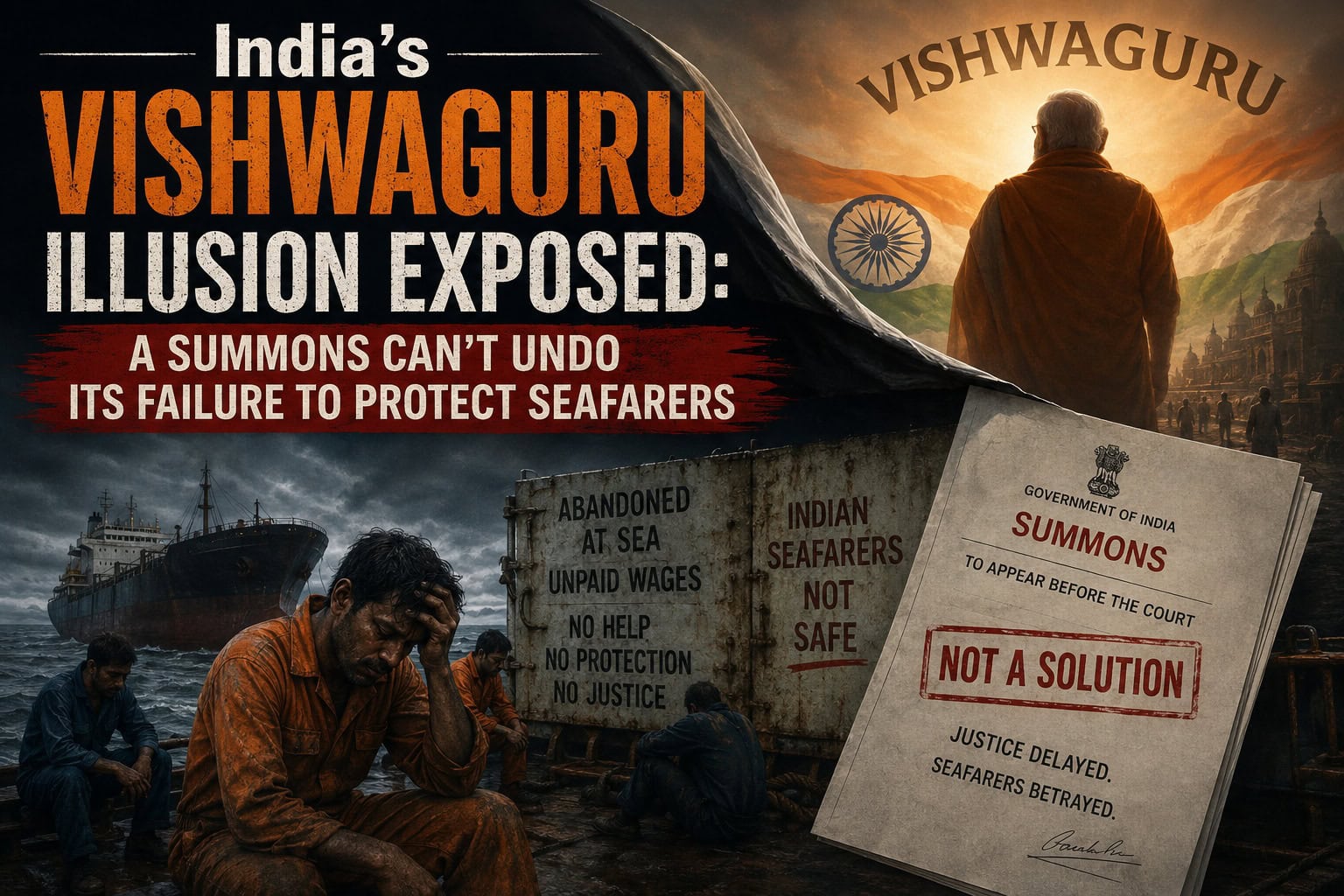
New Delhi’s response to four dead citizens fit on a single page. Russian Chargé d’Affaires Vladimir Ladanov was summoned to the Ministry of External Affairs on Tuesday and informed that India held “grave concerns” over the attack on the commercial vessel MV Golden Leo, struck on the evening of 19 July while departing the Ukrainian port of Odesa. Four Indian seafarers were killed. A fifth remains in critical condition. By nightfall, a statement had been issued, a diplomat had been photographed walking into a building, and the file was, in every practical sense, closed.
That is the part worth sitting with. Not the summons itself, which is routine and unremarkable as diplomatic gestures go, but the fact that it is the entire response. No advisory restricting Indian crews from vessels that transit active war zones. No accounting of how many Indian seafarers are still sailing through the Black Sea tonight on ships flagged to countries with no stake in protecting them. No minister standing up to explain what changes, concretely, so that this is not simply absorbed as the cost of doing business. A government that cannot tell its own citizens what it is doing to keep them off the next ship that gets hit has not protected them; it has outsourced their safety to chance and called it a foreign policy.
This is not a new failure, and the record backs that up. When ISIS abducted 40 Indian construction workers from Mosul in June 2014, 39 were shot within days, yet the government spent close to four years publicly insisting the men were alive, a position Foreign Minister Sushma Swaraj only reversed in Parliament in March 2018, after DNA testing confirmed what the group’s lone survivor had already been saying since 2015. When Houthi forces in Yemen held Indian security guard Anilkumar Raveendran hostage for nearly five months following the July 2025 attack on the merchant vessel MV Eternity C, his release came through Omani mediation, not Indian pressure of any kind. And for more than four decades, Sri Lankan naval personnel have shot Tamil Nadu fishermen in the Palk Strait, a toll parliamentarians have placed in the hundreds, met each time with the same joint statements and “concerns conveyed” rather than anything that has actually stopped the shooting. The MV Golden Leo is not an exception to how India handles its citizens’ deaths abroad. It is the pattern, repeating on schedule.
That gap is what has been driving the anger online, and it is a fair anger. India supplies a vast share of the world’s commercial seafarers because that labour is cheap, and cheap labour goes wherever the work is, war zone or not. A state that benefits from that arrangement and then has nothing to offer the families of the dead beyond a diplomatic note has failed at the most basic function a government owes its people: keeping them alive. The “56 inch chest” line critics have revived is not really a joke about Russia. It is a joke about a government that built an entire political identity on the promise of strength and then, when citizens actually needed protecting, produced a démarche and a press release, the same démarche and press release it has produced every time before.
None of this is complicated by India’s need to stay on speaking terms with both Moscow and Kyiv. That balancing act explains why New Delhi will not name Russia as the attacker, and reasonable people can accept that a great power’s foreign policy sometimes trades moral clarity for leverage. What it does not explain is the absence of any domestic measure to stop putting Indian citizens on ships heading into the line of fire, or the decades-long refusal to build one even after Mosul, even after Eternity C, even after hundreds of fishermen. That failure sits entirely on New Delhi’s side of the ledger, and no amount of diplomatic even-handedness with Moscow excuses it.
Four families buried their dead this week without a single answer about why their sons were allowed onto that ship in the first place, and without a single commitment about the next one. Until the government can say what it is actually doing to stop this from happening again, rather than what it said after it happened, the “Vishwaguru” it sells abroad and the government its own citizens describe at home will keep drifting further apart, one summoned diplomat at a time.
About the Author