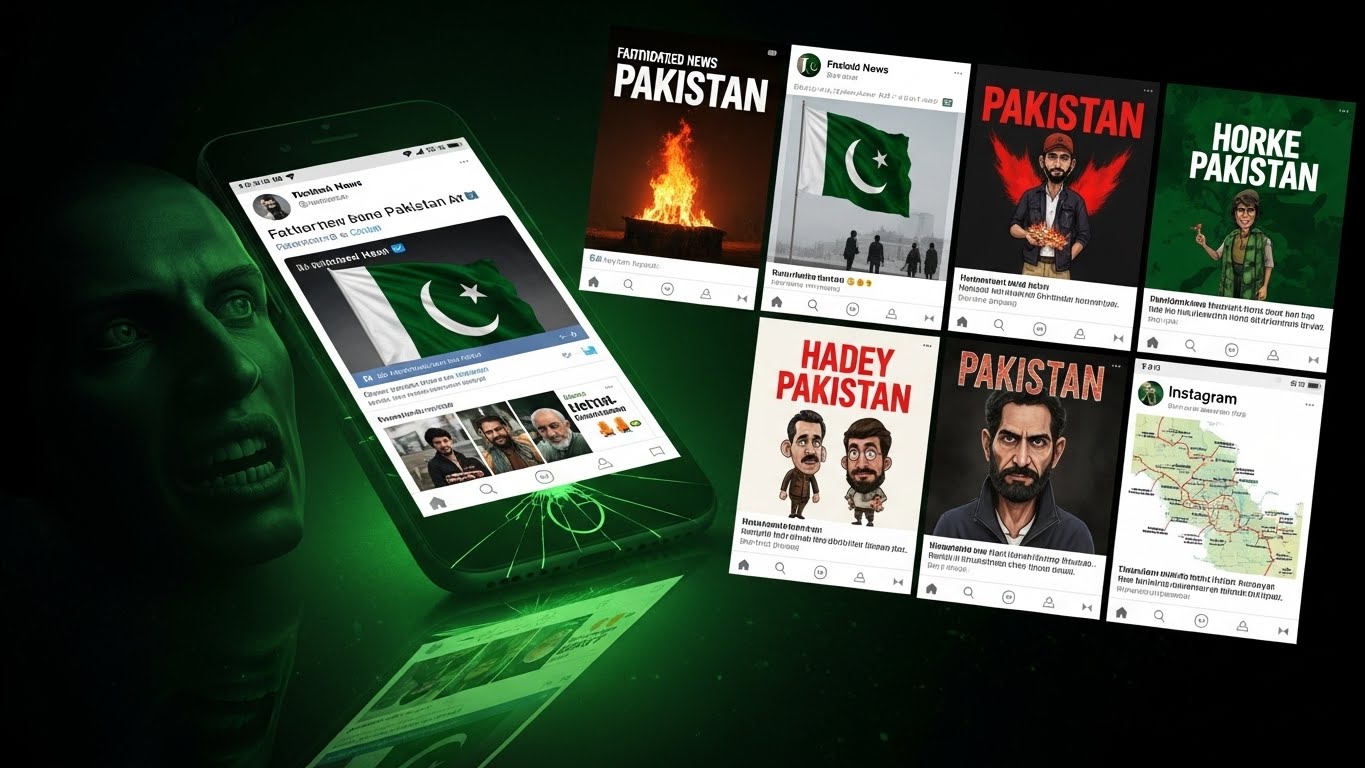
The greatest weapon in this era isn’t a missile; it’s a lie told convincingly. We have long been cautioned that the ‘gray zone’—that murky space on social media—is being exploited by hostile intelligence agencies using human rights as a Trojan horse. It was easy to ignore the warnings before, but the game has changed. The subtlety is gone. We are witnessing the masks drop in real-time, and the ugly truth of foreign-sponsored chaos is staring us right in the face. Nothing illustrates this clumsy unravelling better than the curious case of the social media account “Naima Zehri” and the recent, emotive theatrics of UN-affiliated “experts.”
Let us speak plainly about “Naima Zehri.” For months, this account has postured as a tireless crusader for Baloch rights, broadcasting from an undisclosed location abroad. It has gathered followers by weaponising the narrative of victimhood. But recently, the algorithm exposed the operator. The facade crumbled not through a hack, but through the account’s own erratic behaviour.
We must ask: since when does a Baloch rights activist turn into a PR machine for Bollywood’s anti-Pakistan propaganda? Recently, this so-called activist has been busy promoting Indian films designed to slander Pakistan’s armed forces. Even more damning is the account’s sudden, fawning admiration for Aditya Raj Kaul—an Indian journalist whose career is built on a bedrock of venomous anti-Pakistan and anti-Muslim rhetoric.
One has to pause and ask “Naima Zehri” directly: Is the dignity of the Baloch people a joke to you? Do you truly believe that the path to justice lies in retweeting the talking points of the Modi regime? By aligning yourself with voices that actively wish for the destruction of this country, you have answered the question that matters most. You are not a voice for the missing; you are a loudspeaker for New Delhi. This is not activism; it is a cheap, outsourced transaction. The people of Balochistan, who are patriotic and politically astute, can see the difference between a daughter of the soil and a digital puppet.
This dissonance—this gap between reality and the foreign-manufactured narrative—is not limited to faceless Twitter trolls. It has infected the highest levels of international discourse.
Take, for instance, the recent fervour regarding the detention of a high-profile political prisoner. A report circulating from a UN “torture expert” has generated breathless headlines, painting a grim picture of isolation, surveillance, and failing health. The language is designed to shock. It uses “high headline power” to trigger an emotional response globally.
But let us dissect the mechanism here. The public must understand that this is not a United Nations verdict. It is not a court finding. It is not an official decision by the OHCHR. It is the non-binding opinion of an independent contractor—a “rapporteur”—who operates with limited access to ground realities and seemingly unlimited access to one-sided lobbying. These experts often rely on hearsay fed to them by political lobbyists in London and Washington, rather than verifying facts with the Ministry of Foreign Affairs or the Law Ministry.
The reality, obscured by these emotive press releases, is boringly bureaucratic. The former Prime Minister in question is not only healthy; he is being provided facilities that exceed what is entitled by the law of the land. His exercise regimen, diet, and medical access are all matters of record. The “torture” exists only in the adjectives used by the rapporteur, not in the prison cell.
Yet, this specific narrative is pushed for a reason. It is designed to act as a “credibility shield,” using the UN logo to sanitise political propaganda. It creates a crisis where none exists. It is an attempt to pressure Pakistan’s judiciary through international opinion rather than domestic law.
There is a straight line connecting the behaviour of the “Naima Zehri” account and the “UN Expert” statement. Both rely on distance to maintain their deception. Both rely on the assumption that if a lie is told loudly enough from “abroad,” it will eventually become the truth at home.
The state apparatus—the Ministry of Foreign Affairs and the Law Ministry—will rightly issue their rebuttals. But the court of public opinion must also render a verdict. We are witnessing a coordinated assault where supposed advocates for human rights end up championing the interests of hostile neighbours.
To “Naima Zehri” and the architects of these manufactured crises, the message is simple: You cannot claim to fight for the people of Pakistan while simultaneously shaking hands with those who conspire against them. The charade is over. The “abroad” champion is nothing more than a foreign asset, and the “expert” opinion is nothing more than political noise. Pakistan deserves truth, not this orchestrated theatre.
About the Author