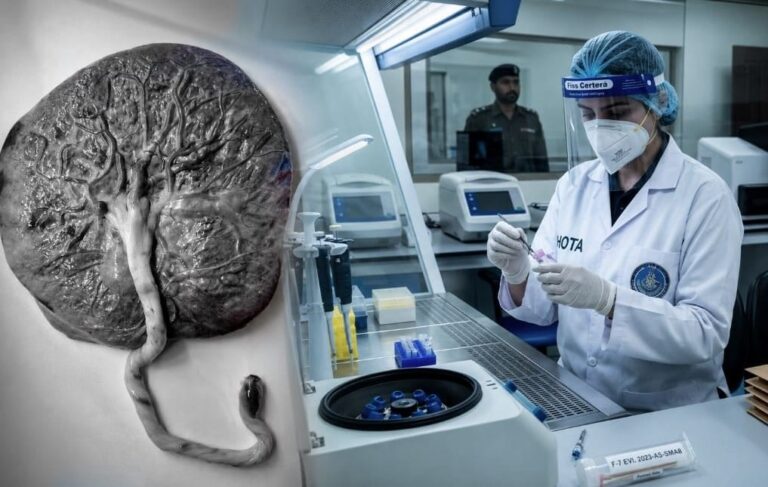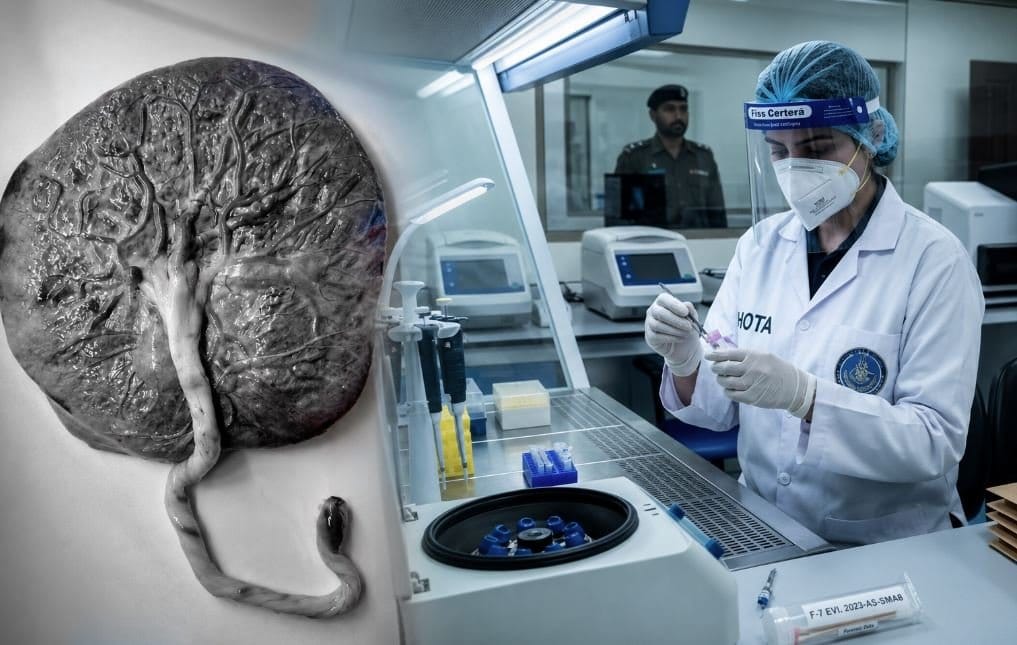
ISLAMABAD – Authorities in Pakistani capital busted human placenta processing network near Sector F-7, exposing one of the most disturbing forms of biological trafficking operating in the shadows. Federal Investigation Agency (FIA) and the Human Organ Transplant Authority (HOTA) arrested five suspects, including three Chinese nationals and two Pakistanis, after raiding facilities allegedly used to collect, dry, process and prepare human placentas for illegal export to Vietnam.
Investigators say the shipments were disguised as sheep organs or labeled “She Placenta” to avoid detection at customs. For many people, the case raised an immediate question: Why would anyone smuggle human placentas?
The placenta is a temporary built organ that develops during pregnancy and supplies oxygen and nutrients to the unborn baby while removing waste. After childbirth, it is naturally expelled from the mother’s body and, in most hospitals, treated as medical waste. However, in some parts of the world, particularly in underground markets across Asia, the placenta is viewed as a valuable commodity rather than medical waste.
ایف 7 تھانہ کوہسار کی حدود سے مبینہ طور پر بھاری مقدار میں انسانی اعضاء برآمد انسانی پلاسنٹا صرف حاملہ خواتین کے حمل اور زچگی کے بعد حاصل ہوتا ہے، ایسے میں سوال یہ ہے کہ اسلام آباد کے پوش ایف 7 سیکٹر سے بڑی مقدار میں برآمد ہونے والا انسانی پلاسنٹا کس جگہ سے اور کہاں سے آیا اس کی… pic.twitter.com/LPnYIbtqAB
— Ishtiaq Ali (@IAmIshtiaqAli) June 25, 2026
Suspects sourced placentas from hospitals in several Pakistani cities before transporting them to Islamabad for processing. Authorities recovered fresh, dried and processed placental material along with machinery believed to have been used in the operation. Officials are investigating how the biological material was obtained and whether hospital staff or other insiders were involved.
One of the biggest drivers is Traditional Chinese Medicine (TCM), where processed human placenta, commonly famous as Ziheche, historically been promoted as a remedy believed to improve vitality, strengthen immunity, enrich blood circulation and treat infertility or fatigue. Although these claims remain scientifically disputed, demand continues to exist in certain markets, creating opportunities for illegal suppliers.
Human placenta has also found its way into some cosmetic and beauty products. Extracts derived from placental tissue are marketed for their proteins, hormones and growth factors, with claims that they promote healthier skin and reduce signs of aging. While some cosmetic ingredients are legally sourced and regulated, illegally trafficked placentas can enter unregulated manufacturing chains.
Placental tissue also has legitimate medical value. Under strict ethical and legal controls, donated placentas can be processed to produce amniotic membrane grafts used in burn treatment, eye surgery and chronic wound care because of their healing properties. Scientists likewise use donated placental tissue for stem cell and genetics research. However, these legal uses require informed consent, disease screening and regulatory oversight—requirements completely absent in the black market.
Unlike regulated medical donation, illegal placenta trafficking bypasses patient consent, hospital protocols and public health safeguards. Unscreened human tissue can carry infectious diseases, including hepatitis, HIV and syphilis, creating serious health risks if used in medicines, supplements or cosmetic products.
The trade raises ethical concerns. Mothers are generally not informed that placentas collected after childbirth could become part of an illegal commercial network. Authorities believe organized criminal groups often rely on hospital insiders or intermediaries to obtain biological material without authorization, turning medical waste into a lucrative cross-border business.
Investigators believe the Islamabad operation was not an isolated case but part of an international trafficking network serving overseas demand. The alleged use of false labeling and concealed exports points to a sophisticated smuggling operation rather than a local criminal enterprise. Authorities have registered cases under Pakistan’s organ transplantation laws and are expanding investigations to identify the full supply chain, including hospitals, facilitators and overseas buyers.
Three Chinese, two Pakistanis arrested in Islamabad organ smuggling raid
About the Author