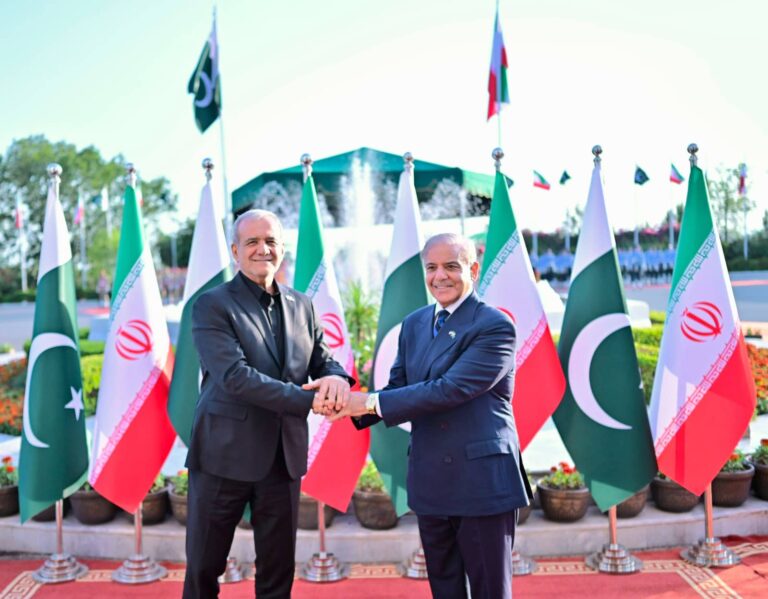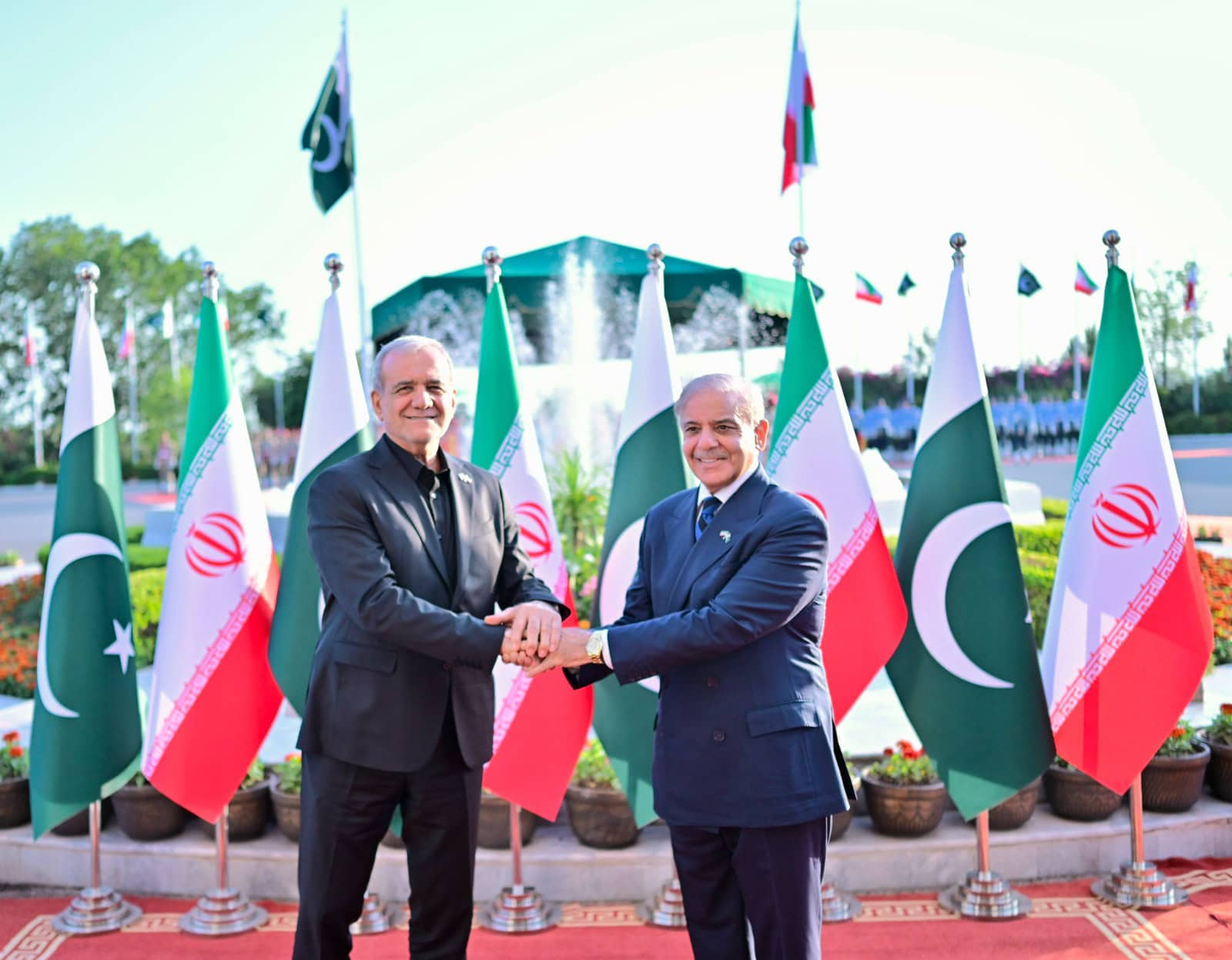
When Pakistani Air Force jets rose to escort President Pezeshkian’s plane on its final approach to Nur Khan Airbase, and the ceremonial guns fired across Islamabad, it wasn’t just protocol. It was two proud nations choosing, deliberately and publicly, to celebrate a friendship that goes back further than either state’s modern borders. Iran is here to thank Pakistan, to appreciate the gesture, and to acknowledge the efforts Pakistan made to secure the US-Iran deal. If it were not Pakistan, God knows what would have happened.
The Iranian President’s decision to make Pakistan his first foreign visit since the war on Iran began in February, rather than travelling to any country that presents itself as the region’s so-called “vishwaguru,” is a clear signal of Pakistan’s regional relevance and the strengthening trajectory of Pakistan-Iran relations. Prime Minister Modi and his political ecosystem tried to undermine the peace process, but failed. Their interest is not in saving lives or reducing tensions; it is in keeping conflict alive for political messaging, online trolling, and anti-Pakistan propaganda. For them, war is not a human tragedy — it is a PR opportunity.
A friendship rooted in shared civilisation
Long before Pakistan or the Islamic Republic existed, Persian culture and the lands that became Pakistan were woven into the same fabric of history. Urdu carries Persian in its very bones. Allama Iqbal, the philosopher-poet whose ideas helped inspire Pakistan’s creation, wrote much of his most important work in Persian and drew deeply from Iranian Sufi thought — so deeply that Iranians rightly count him as part of their own intellectual heritage too. Few neighbouring nations share that kind of soul-level kinship.
Iran was one of the very first countries to recognise Pakistan’s independence in 1947. For decades, the two nations have stood as close allies, bound by a shared strategic outlook and a mutual belief that the region is best served by cooperation. Pilgrims have moved between the two countries for generations — Pakistani devotees travelling to Mashhad and Karbala — sustaining a bond between ordinary people that has outlasted every passing political season.
The 800-kilometre border the two countries share isn’t just a line on a map. It is a living connection — workers, traders, and pilgrims crossing it every day, weaving the two economies and two peoples together in ways that go far beyond government statements.
A visit built on real substance
This wasn’t a ceremonial photo-op. Foreign Minister Araghchi, travelling alongside Pezeshkian, and being received personally by Pakistan’s Ishaq Dar rather than handed off to a protocol officer, signals that both governments are serious about turning warmth into results.
For Iran, deepening ties with Pakistan reflects its broader vision of a more connected, cooperative region — one where a major Muslim-majority neighbour stands publicly and proudly alongside it. For Pakistan, this partnership holds genuine promise for its people: access to abundant, affordable Iranian gas at a moment when the country is working hard to secure its energy future. The long-discussed pipeline connecting Iranian gas fields to Pakistani cities represents a tangible opportunity — Iranian supply meeting Pakistani demand, to the direct benefit of households and industries on both sides of the border.
Beyond energy, both governments have voiced ambitions to expand trade, deepen economic cooperation, and build the kind of steady institutional contact that keeps a friendship strong between the big, ceremonial moments.
Two nations, charting a shared future
The flyover, timed to greet Pezeshkian’s plane while still airborne, and the 21-gun salute that followed, were Pakistan’s way of expressing genuine respect and warmth — a confident, independent nation honouring a friend on its own terms.
What comes next — progress on the pipeline, expanded trade, deeper people-to-people ties — will determine how much this moment delivers in the months ahead. But the foundation is already strong: a shared history stretching back centuries, deep cultural kinship, a border that connects millions of lives, and two governments now investing visibly in each other’s future. The guns and the jets weren’t just a ceremony. They were a statement that this friendship still matters deeply to both nations — and that both are ready to build on it together.
About the Author