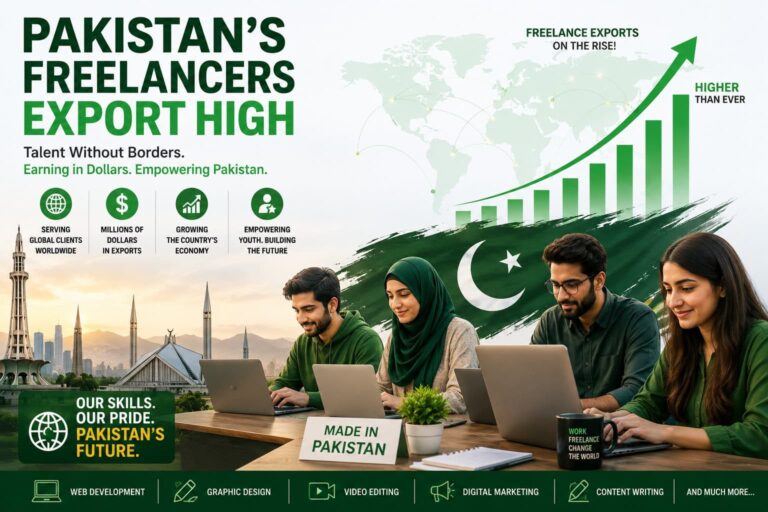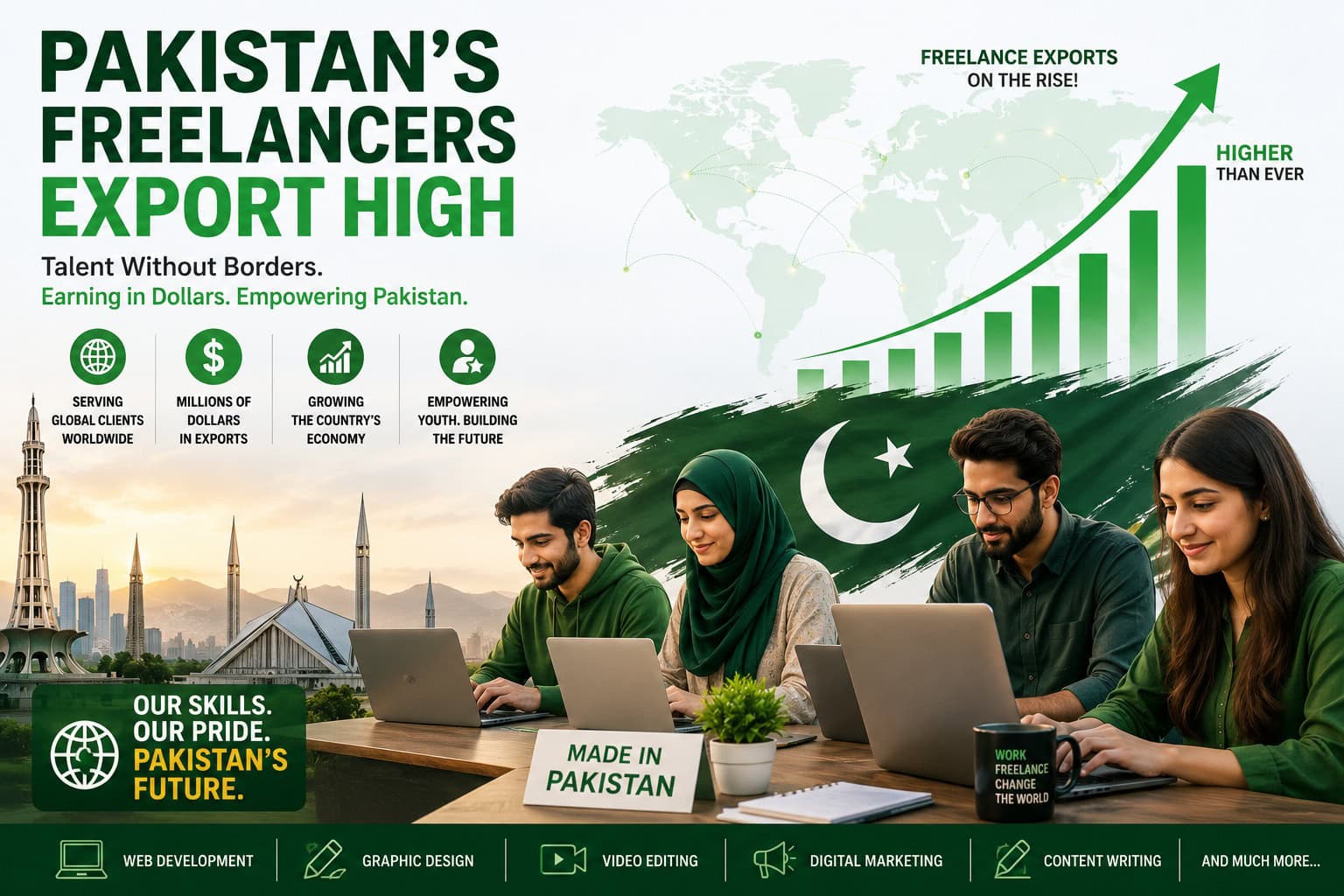
Ali did not need a government portal. He needed a secondhand laptop, a shared WiFi connection, and a client in Ohio who needed a WordPress fix at two in the morning. He earned five dollars. Left a five-star rating. Did it again. Three years later, he has eleven long-term clients and a bigger house in Karachi.
Now multiply Ali by three million.
That is Pakistan’s freelance workforce today. In the first eleven months of fiscal year 2026, those three million people earned $1.6 billion in verified export remittances — growing at eighty percent year-on-year. In May 2026 alone the number was $169 million, up 87 percent from May 2025. Total ICT exports for the first nine months of the fiscal year hit $3.38 billion, producing a trade surplus of $2.91 billion. A trade surplus. In a country that usually discusses economics in terms of deficits and IMF tranches.
None of this came from a government scheme. It came from individuals sitting alone, figuring it out, failing, trying again, building reputations one review at a time on platforms that do not care where you are from as long as your work is good.
The triumph contains a warning. The freelancers got here despite the state, not because of it. Payment rails are broken. Legal recognition is thin. If the government does nothing, the ceiling in this sector will be reached sooner than anyone expects.
Here is what must change.
*Fix how freelancers get paid.* Earning in dollars abroad while banking in rupees at home involves friction that eats margins and pushes money into informal channels. The State Bank must fast-track the development of frameworks for licensed digital payment providers. Which brings us to the most obvious gap in the room: PayPal.
Pakistan is one of the few countries where PayPal is available for inbound purchases but not for outbound payments. For a freelancer, this is not a minor inconvenience — it is a closed door on the world’s most trusted payment method. Clients who would otherwise hire Pakistani talent hesitate when the payment handshake is complicated.
PayPal’s absence is not about hostility toward Pakistan. It is about compliance risk and regulatory ambiguity — both of which are solvable. The path forward: the SBP formally classifies freelance platform receipts as a distinct export-remittance category with an auditable reporting framework. The government negotiates AML assurances with relevant US financial authorities, similar to the arrangement that unlocked PayPal in India. PayPal enters via a licensed pilot limited to verified freelancers on recognised platforms, with capped volumes scaled over eighteen months based on compliance data. The Ministry of IT leads the negotiation — not Finance. PayPal responds to digital-economy mandates, not to bureaucratic handoffs between ministries. In parallel, domestic wallets like Nayapay and SadaPay should be licensed to interoperate directly with freelance platforms so Pakistan is never entirely dependent on any single foreign company’s timeline.
*Create a freelancer legal identity.* A self-employed person in Pakistan has no simple legal status that foreign clients can verify. A lightweight, sole-digital trader registration — tax number, export classification, basic liability recognition — would open enterprise contracts currently closed to independent workers.
*Treat broadband as revenue infrastructure.* The girl in Peshawar doing UX research for clients in Singapore is doing it on a connection she cannot guarantee will hold. Subsidised, stable broadband in Tier-2 and Tier-3 cities is not a welfare program. Every reliable connection is a potential dollar earner.
*Tax fairly and simply.* Freelancers need a predictable regime with export income incentives, not complex withholding structures that make declaration more painful than evasion. The FBR’s instinct to tax aggressively will strangle the very sector producing one of Pakistan’s few genuine trade surpluses.
*Unlock freelancer credit.* A freelancer with $50,000 in documented annual earnings cannot get a small business loan because banks have no category for their income type. A pilot credit facility, verified against platform ledgers, would let the sector reinvest in itself.
The global freelance market is projected to reach $20 billion by 2031. Pakistani freelancers are already inside it, already trusted, already booked. During the same period, they outpaced the growth rates of India, China, and the UAE in digital services.
The government’s job is not to rescue this sector. It is to stop the need for workarounds. Fix the plumbing. Create the legal containers. Get PayPal in the room. Get out of the way on everything else.
Three million people built $1.6 billion without a single policy announcement. Imagine what they do when the policy actually helps.
About the Author