WASHINGTON – AI chatbot by Elon Musk’s xAI, Grok, was designed to analyze data, generate insights, and assist users with complex decision-making, but the AI tech owned by the world’s richest person moved far beyond consumer use.
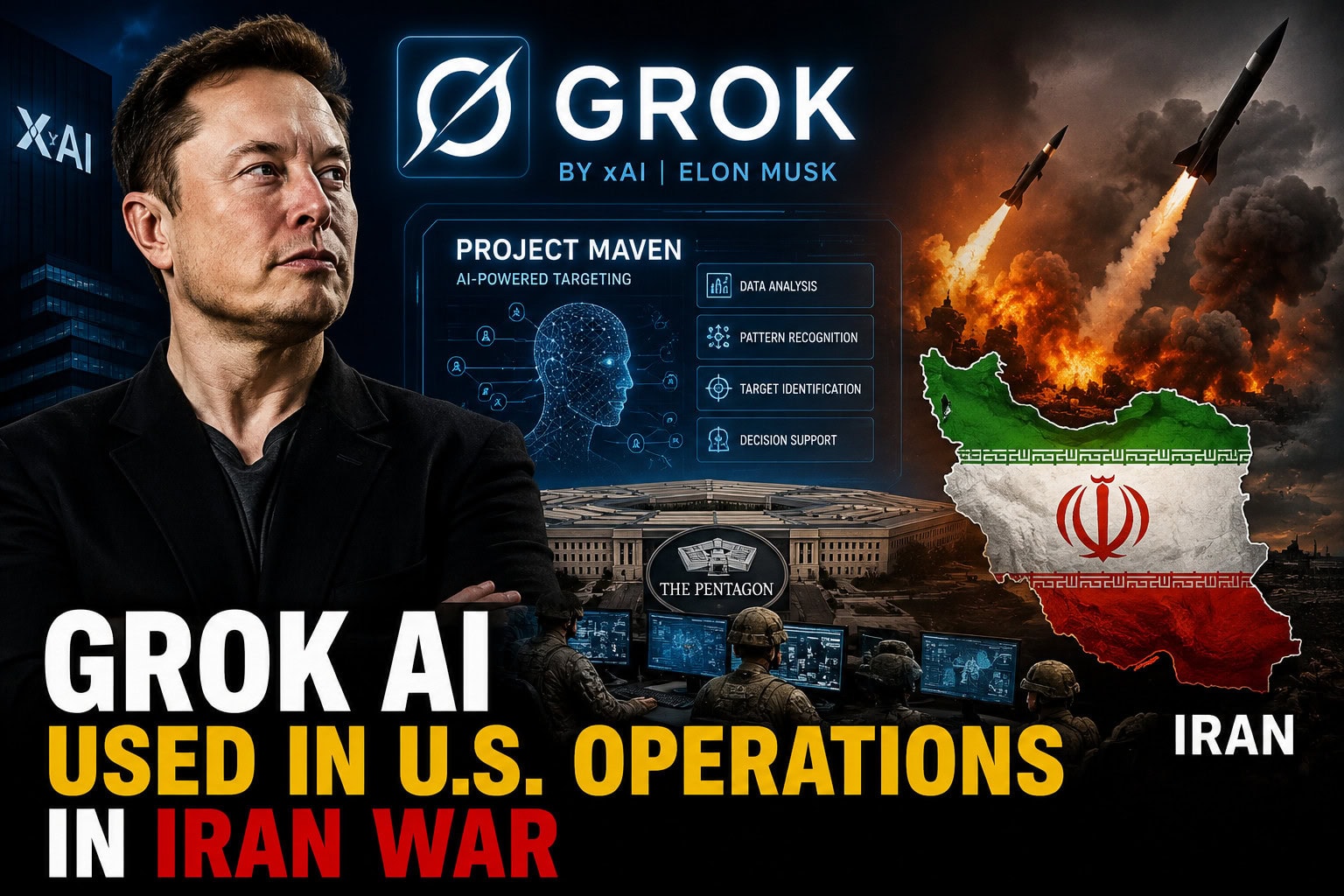
As per US government filings, a specialized version Grok Gov Model was integrated into Pentagon’s Project Maven program, helping military officials rapidly process intelligence and identify targets during operations linked to Tehran.
Officials said AI helped the deployment of more than 2,000 munitions against 2,000 targets in just 96 hours during Operation Epic Fury, showing the growing role of AI in modern warfare.
The disclosure emerged in a June 15 legal brief reviewed by a wire service, as the filing was submitted by the US Department of Justice as part of a lawsuit over gas-powered turbines supplying electricity to an xAI data center in Memphis.
While the case centers on environmental concerns, it unexpectedly offered a rare glimpse into how AI is being used behind the scenes in military operations.
Pentagon AI official Cameron Stanley said Grok is now being used within Project Maven, the military’s long-running AI-assisted targeting initiative. The program was previously powered by Anthropic’s Claude model before the government shifted toward other AI providers.
Stanley said Maven Smart Systems helped US forces deploy more than 2,000 munitions against 2,000 separate targets during Operation Epic Fury, a 96-hour military campaign. He described Grok’s government-focused model as a tool that significantly improved operational efficiency.
The revelation shows how rapidly AI is moving from commercial products into national security applications. Military officials reviously argued that AI can process intelligence faster, identify patterns more efficiently, and help commanders make decisions in real time. Critics, however, warn that the tech is advancing faster than public oversight and raises difficult questions about accountability when machines are involved in life-and-death decisions.
The court filing also sheds light on a broader shift within the Pentagon’s AI strategy.
The government ended its contracts with AI startup Anthropic earlier this year after the company refused to allow its technology to be used for fully autonomous strikes or mass surveillance of Americans. Pentagon subsequently expanded its work with other leading AI firms, including Google, OpenAI, and Musk’s xAI.
The growing role of AI in military operations has also triggered resistance inside the technology industry. Hundreds of Google employees have previously opposed the company’s involvement in classified military projects, while researchers and ethicists continue to debate the risks of using advanced AI systems in warfare.
For Tesla and X chief, the disclosure places xAI at center of one of the most consequential discussions in technology today. It all started as race to build powerful AI tools and is increasingly becoming a debate about how those tools are used, and who should decide their role in conflicts that can shape global security.
Elon Musk s Starlink ready to provide internet services in Pakistan
About the Author