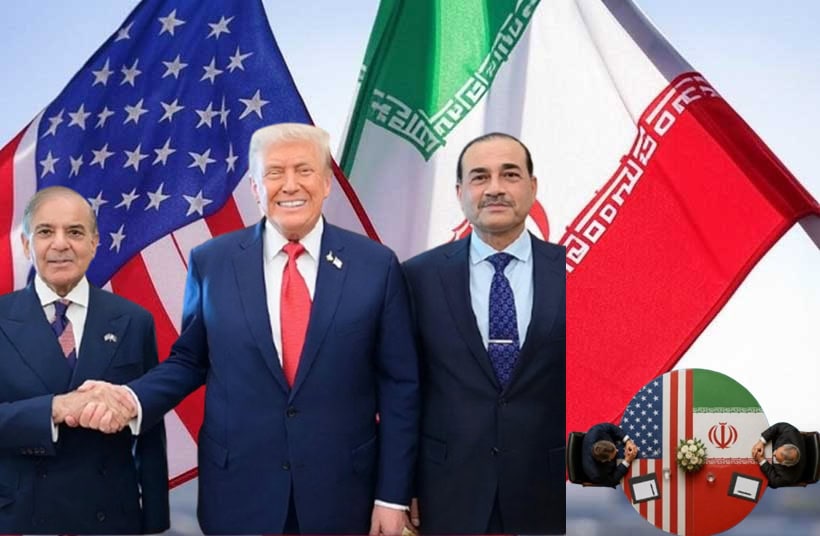
GENEVA/ISLAMABAD – US and Iran are set to formally sign peace agreement in Geneva, with Pakistan emerging as key facilitator in arranging high-profile diplomatic event.
Pakistan will also host the arrangements related to the signing ceremony, which is scheduled to take place in Switzerland on June 19. Prime Minister Sharif is expected to depart on Thursday, accompanied by federal ministers, Deputy Prime Minister, and Army Chief Field Marshal Syed Asim Munir.
The announcement of US–Iran agreement has drawn widespread international attention, with Pakistan being acknowledged once again for its mediation efforts between the two countries. Several world leaders, including those from the UK, China, Australia, Türkiye, Qatar, Saudi Arabia, Canada, Italy, the Netherlands, Malaysia, and Kuwait, reportedly expressed appreciation for Islamabad’s diplomatic role as well as other countries involved in facilitating dialogue.
US leadership, including President and Secretary of State, repeatedly described Pakistan as key intermediary in negotiations with Iran, while American officials have publicly praised its efforts. Iran has also previously recognized Pakistan’s role in facilitating communication between the two sides.
US Vice President JD Vance said President Donald Trump could release an initial draft of the agreement before Friday, describing the US–Iran deal as a brief, general document of around “one and a half pages.” His remarks came after Trump claimed that the agreement had already been signed electronically and fully finalized.
The agreement was electronically signed by Trump, Vice President JD Vance, and Iranian Parliament Speaker Mohammad Bagher Ghalibaf.
Officials said the formal signing ceremony is expected to take place in Geneva later this week, with reports suggesting that the Strait of Hormuz may be reopened on the same day under the agreement’s implementation timeline.
The development comes as President Trump attends the G7 summit in France, where a special session on Iran is scheduled. Leaders from Egypt, Qatar, and the United Arab Emirates are also expected to join discussions on the evolving situation. During a meeting with French President Emmanuel Macron, Trump said the agreement had already been finalized, stating, “Everything is done.”
US officials call this deal a broad framework agreement rather than a fully detailed treaty. Key reported elements include Iran’s commitment to regional peace and stability, including ending support for groups described as militant or terrorist organizations. A central provision, according to officials, is Iran’s verifiable commitment not to pursue nuclear weapons.
US President Donald Trump has clarified that the agreement does not include immediate easing of economic sanctions, stating that any future changes will depend on Iran’s behavior and compliance with the deal.
He also referenced ongoing regional tensions, including the situation involving Lebanon and Hezbollah, saying the United States is seeking ways to bring long-standing conflicts in the region to an end.
US-Iran Peace Deal signing in Geneva to be hosted by Pakistan, says PM Shehbaz
About the Author