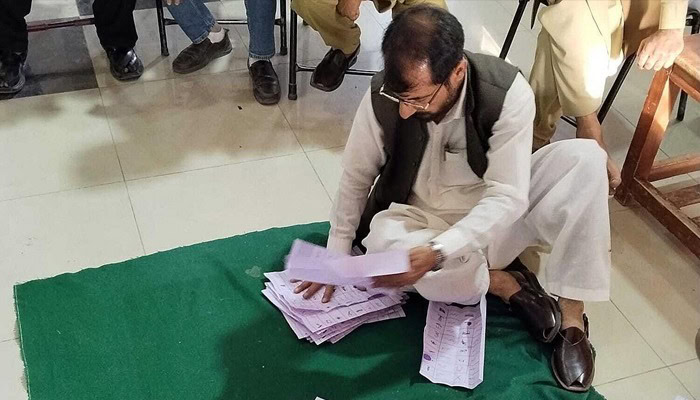
GILGIT – Pakistan Peoples Party (PPP) has emerged as the leading political force with nine seats in Gilgit-Baltistan General Assembly Elections.
According to unofficial results available from 18 constituencies, the PPP has secured nine seats, while independent candidates have won five. The Pakistan Muslim League-Nawaz (PML-N) has captured three seats and Majlis Wahdat-e-Muslimeen (MWM) has won one seat.
Among the constituencies declared so far, PPP candidates won in GBA-1, GBA-4, GBA-5, GBA-7, GBA-9, GBA-10, GBA-11, GBA-12 and GBA-19. Independent candidates were successful in GBA-3, GBA-6, GBA-21, GBA-23 and GBA-24, while PML-N secured victories in GBA-18, GBA-20 and GBA-22. MWM won GBA-8.
In GBA-1 Gilgit-I, PPP candidate Amjad Hussain won with 10,594 votes, defeating PML-N’s Muhammad Shafiquddin, who received 6,312 votes. In GBA-3 Gilgit-III, independent candidate Syed Sohail Abbas secured victory with 7,877 votes, ahead of PPP’s Aftab Haider Advocate.
PPP candidate Muhammad Ali Akhtar won GBA-4 Nagar-I with 7,654 votes, while party candidate Zulfiqar Ali Murad captured GBA-5 Nagar-II with 2,705 votes. Independent candidate Nek Nam Karim won the Hunza constituency.
In Skardu-I, PPP’s Syed Tauqeer Mehdi defeated former governor Raja Jalal Hussain Khan, securing 4,295 votes. PPP also recorded victories in Skardu-III and several other constituencies across the region.
PML-N candidates were leading or declared successful in several constituencies, including GBA-13 Astore-I, GBA-14 Astore-II and GBA-22 Ghanche-I. Independent candidates also performed strongly, particularly in Ghizer and Ghanche districts.
The Gilgit-Baltistan Assembly consists of 33 seats, including 24 directly elected seats, six reserved seats for women and three seats reserved for technocrats. A party or coalition requires 17 seats to form a government.
Election authorities reported that more than 958,000 voters were registered for the polls. A total of 396 candidates contested the elections, including 266 independents. Polling was conducted at 1,368 polling stations across the region.
Security arrangements remained strict throughout the election process. More than 15,000 police personnel were deployed, while Section 144 remained in force in Diamer district. Authorities classified 480 polling stations as highly sensitive, 350 as sensitive and 457 as normal.
Meanwhile, access routes leading to the Gilgit-Baltistan Election Commission office were restricted, with barriers and security measures put in place. Only official vehicles were reportedly being allowed access to the premises.
The results remain unofficial and subject to confirmation by election authorities.
About the Author