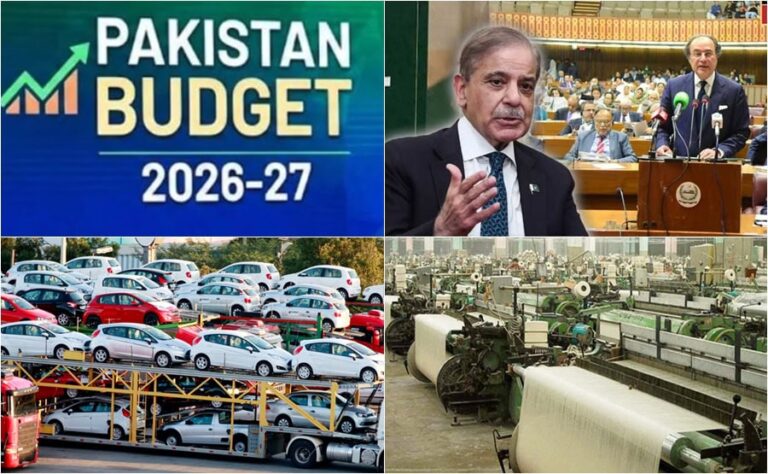
ISLAMABAD — All eyes are now on upcoming Budget 2026–27, where a mix of economic pressures and policy adjustments is expected to shape key decisions. While concerns remain over possible increases in taxes and duties on several essential items, there is some relief for industry and consumers, as reports suggest potential cuts in several sectors.
The federal budget is expected to bring a wave of relief on imported goods amid negotiations with the International Monetary Fund (IMF).
Authorities are considering reductions in import-related taxes, including regulatory duties, additional customs duties, and standard customs tariffs across thousands of items—potentially reshaping prices in multiple sectors.
The imported vehicles may also become cheaper if proposed duty cuts are approved. At the same time, the government is reportedly working on reducing tariffs on raw materials used by export industries, a move aimed at boosting competitiveness in global markets. Telecom sector could also see relief, with possible tax reductions on machinery and equipment required for 5G infrastructure development. Similarly, agricultural imports may benefit from lower duties on machinery, tools, and parts that are not manufactured locally.
Under PM’s direction, Ministry of Industries and Commerce already prepared draft National Tariff Policy, aligning reforms with IMF targets while attempting to ease pressure on domestic industry through more competitive input costs.
According to sources, the proposed changes could be extensive, additional customs duty may be reduced across 3,149 tariff lines of imported goods. Regulatory duty cuts are expected on over 1,900 tariff lines.
Agricultural and industrial raw materials not produced locally may see lower import costs while government plans to eliminate the remaining 2% additional customs duty on 518 tariff lines in the 15% slab. In the 20% slab, duty may be reduced from 4% to 2% on 2,166 tariff lines. On higher-duty items, rates may drop from 6% to 4% across 468 tariff lines.
Machinery and equipment for EVs manufacturing plants could also receive tax relief amid push toward cleaner and modern transport production.
If approved, the measures could lead to reduction in import costs, potentially easing prices for industries and consumers alike, while keeping Pakistan aligned with IMF fiscal requirements.
Budget 2026–27: What will be cheaper and What will be expensive in Pakistan amid IMF-Backed Reforms?
About the Author