TEHRAN/WASHINGTON – Strait of Hormuz has once again become center of fast-moving geopolitical storm, as Iran sharply rejects the latest US-led maritime initiative, calling it “Project Deadlock” and warning that military pressure will only deepen the crisis.
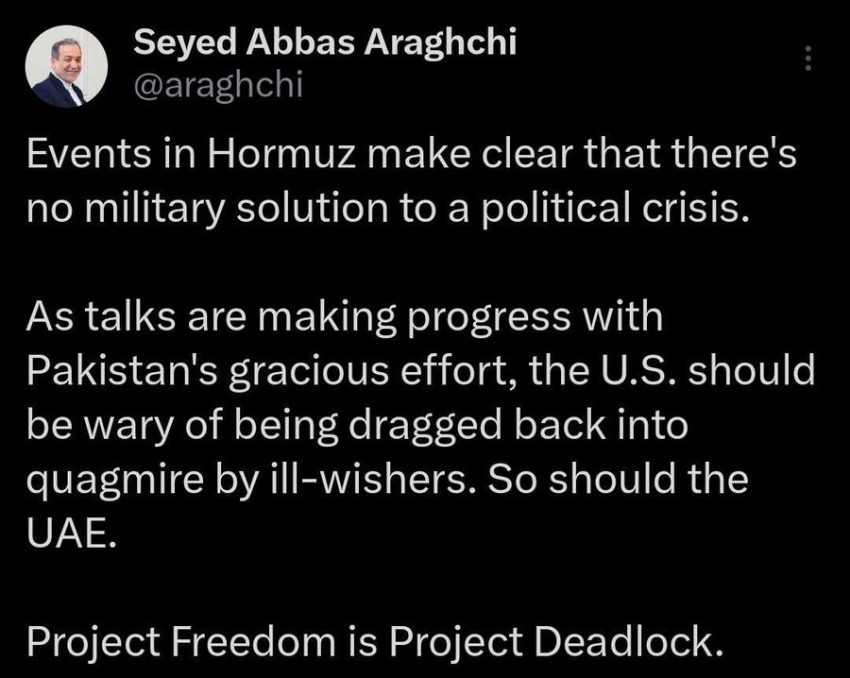
In a tense escalation, Iranian Foreign Minister Abbas Araghchi said the situation unfolding around Hormuz proves there is no military solution to what he called a deeply political confrontation. The top diplomat also warned that continued escalation could drag regional and global powers into a prolonged quagmire, even as diplomatic backchannels, reportedly involving mediation efforts from Pakistan, remain active.
The already volatile situation around Strait of Hormuz intensified sharply, with Iran issuing a strong warning that the crisis cannot be resolved through military force and accusing external powers of escalating tensions dangerously.
He said talks are progressing with facilitation efforts from Pakistan, while warning both the United States and the United Arab Emirates not to be pulled deeper into what he called a dangerous confrontation. Araghchi also rejected the US-backed initiative “Project Freedom,” branding it a path toward deadlock rather than resolution.
US President Donald Trump issued severe warning, saying Iran would face devastating consequences if it targeted American vessels involved in operations in the region. He claimed Iran had become more open to negotiations but insisted that US military strength in the region has been significantly reinforced, with upgraded weapons and ammunition deployed.
The fragile ceasefire in region appeared to unravel further on May 4. UAE accused Iran of launching a drone strike that sparked a fire at the Fujairah Oil Industry Zone, one of the country’s largest fuel storage facilities. At the same time, US military officials reported escalating confrontations in the Strait of Hormuz, including the destruction of six Iranian military boats and interception of missiles and drones targeting both warships and commercial vessels.
According to US Central Command, led by Admiral Brad Cooper, American forces engaged multiple aerial and maritime threats, shooting down cruise missiles and drones while escorting commercial shipping through the strategic waterway.
Two people were injured in an attack in Bukha in neighboring Oman, though authorities did not publicly identify the attackers. US officials also claimed Iranian speedboats posing a threat in the strait were destroyed by helicopter strikes, further escalating military confrontation in the region.
President Trump alleged that Iranian actions affected multiple vessels, including South Korean cargo ship, though he maintained that most ships passing through the strait did not suffer damage. Iran, however, has not officially confirmed or denied involvement in the reported attacks, and a senior Iranian military official dismissed claims that its boats were destroyed.
Amid the growing crisis, US is pressing Beijing to intervene diplomatically and pressure Iran to reopen safe navigation routes, while also criticising Beijing’s continued purchase of Iranian oil.
Meanwhile, Pakistan once again stepped into mediating role, facilitating transfer of 22 crew members from the Iranian vessel MV Touska after its detention by US forces, highlighting its ongoing diplomatic engagement in the crisis.
With oil prices surging and global stock markets reacting nervously, the escalating tensions in the Strait of Hormuz have sent shockwaves through international trade and energy markets, raising fears that the confrontation could spiral further out of control.
UAE intercepts Iranian missile attack as air defence neutralises threat
The post ‘Project Deadlock’: Iran slams US ‘Freedom Strategy’ as Hormuz crisis escalates appeared first on Daily Pakistan English News.
About the Author