The Afghan Taliban killed women and children on Pakistani soil. The UN issued no statement. Al Jazeera filed no report. Apparently, Pakistani lives only count when the story fits.
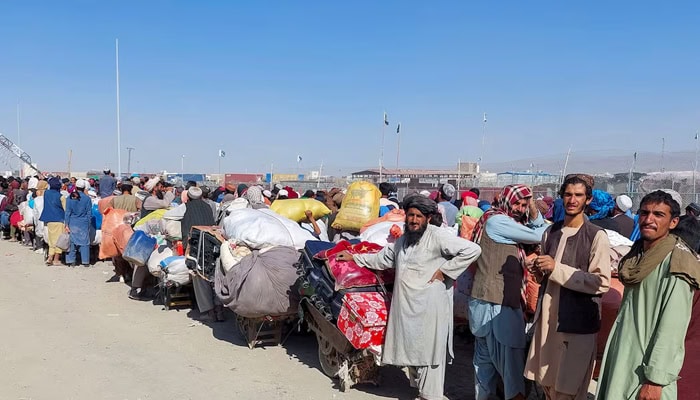
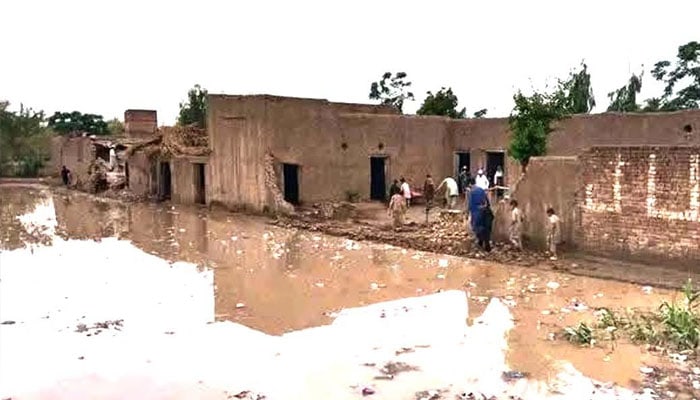
Let us start with what happened, plainly, because plainness is apparently in short supply at the United Nations these days. Between March and April of this year, Afghan Taliban forces fired across the border into Bajaur district on six separate occasions. Nine civilians were killed. Three of them were women. Five were boys. One was a girl, still a child. Twelve more people were wounded. Several homes were destroyed. The district administration documented every case. Pakistan’s security forces responded. The affected communities mourned, buried their dead, and vowed to continue.
And the UN? Quiet. Human Rights Watch? Busy, presumably. Amnesty International? No comment. Reuters? Al Jazeera? They had other things to cover. Perhaps a Taliban press release needed amplifying.
This is not cynicism. This is pattern recognition. Anyone who has watched how international media and human rights institutions respond to violence in this region knows the architecture of selective outrage by now. When the story requires Pakistan to be the villain, the cameras appear. When a UN-designated terrorist organisation kills Pakistani children on Pakistani soil, there is a sudden, collective loss of interest. The silence is not accidental. It is editorial. It is institutional. And it has consequences that go far beyond bad journalism.
A Designated Terrorist Organisation. Killing Children. With No Consequences.
The Taliban is not a grey area. The United Nations itself has designated it a terrorist organisation. That designation exists precisely to trigger a specific international response when the group commits violence. It is supposed to mean something. And yet here we are, with documented cross-border attacks, with names and numbers and dates on record, and the same UN that handed down that designation cannot find the words to say that killing five boys in Bajaur is wrong.
Ask yourself what would happen if the situation were reversed. If Pakistani forces fired across the border and killed nine Afghan civilians, including children, in six separate incidents over two months, the Security Council would have convened a special session before the funerals were finished. Human Rights Watch would have published a forty-page report with satellite imagery. Al Jazeera would be running live coverage with expert panels. The question is not rhetorical. The answer is obvious. And the obvious answer reveals something ugly about how the world assigns value to human lives.
The people of Bajaur are not an abstraction. They are not a statistic in a policy brief. They are families who have been living under the threat of cross-border fire and who, despite everything, have chosen to stand. Locals praised the security forces and district administration for their response. They vowed to continue resisting. That is not the posture of people who feel sorry for themselves. That is the posture of people who have learned, through hard experience, that no one else is coming to speak for them.
The Media Ecosystem That Protects the Taliban
There is a specific kind of media dysfunction at work here that deserves to be named. Several international outlets have, over the years, developed a relationship with Taliban sources that functions less like journalism and more like access journalism at its worst: give the regime coverage, receive access, repeat. In that ecosystem, Taliban grievances are newsworthy. Taliban atrocities are not. Pakistani civilian deaths at Taliban hands are, at best, a footnote, and at worst, a story that never gets filed at all.
This is how impunity gets manufactured, not through grand conspiracies but through hundreds of small editorial decisions that collectively tell a terrorist organisation that its violence against Pakistanis will not be documented, will not be reported, will not be remembered. Every time a story from Bajaur goes unfiled, that message gets reinforced. Every time a human rights organisation publishes its annual report and leaves Bajaur out, the Taliban understands that the cost of cross-border killing is zero.
Pakistani readers deserve to understand this dynamic clearly. The international community’s silence on Bajaur is not neutral. It is not indifference. It is a position. It says that these nine deaths are less urgent, less visible, less worthy of the machinery of international accountability than other deaths in other places. That position should make all of us angry, and that anger should have a specific address.
Accountability Has to Begin Somewhere
Pakistan’s government, diplomatic corps, and civil society organisations need to stop waiting for the international community to notice Bajaur on its own. It will not. The incentive structures do not reward noticing. What is needed instead is a sustained, public, named campaign that puts specific institutions on record: did the UN issue a statement on Bajaur? No. Did Reuters file a report? No. Did Amnesty document the casualties? No. Make the silence itself the story, because the silence is a story.
A girl was killed in Bajaur. Her name should be somewhere in an international human rights report. It is not. That is not a failure of information. The district administration documented everything. That is a failure of will, of institutional courage, of basic moral consistency from organisations that have spent decades building reputations as the conscience of the world. Those reputations, it turns out, have a geography. And Bajaur is outside it.
That should embarrass them. Whether it does is another question entirely.
Casualty figures sourced from the District Administration of Bajaur’s documented account of cross-border incidents in March and April.
Asma Bangash
About the Author