LAHORE – The Faculty of Humanities at Forman Christian College (A Chartered University) successfully conducted a two-day Training of Trainers (TOT) Workshop on Journalist Safety on December 9–10, 2025, in collaboration with the Journalism & Media International Center (JMIC), Oslo Metropolitan University, Norway.
The workshop brought together journalists, media educators, and communication professionals to strengthen institutional capacities for conflict-sensitive reporting, digital security, trauma awareness, and ethical decision-making in high-risk environments.
The opening day focused on Pakistan’s evolving conflict landscape and the practical realities of field reporting. Dr. Altaf Ullah Khan, Dean of Humanities, delivered the welcome remarks and inaugural address, setting the tone for the workshop with an overview of the shifting security environment and the urgency of preparing journalists for unpredictable reporting conditions. The workshop and sessions were facilitated by Dr Syed Muhammad Saqib, Associate Professor of Mass Communication, FCCU.
In the subsequent session, multimedia journalist Ms. Xari Jalil examined the complexities of conflict reporting and the challenges faced by frontline reporters, followed by a brief group-based activity designed to help participants analyze field scenarios.
Senior journalist Dr. Huma Sadaf led the session “Reporting Under Pressure: Assignments, Verification & Field Safety”, inviting participants to reflect on newsroom constraints, decision-making under time pressure, and verification challenges in fast-moving situations.
The morning concluded with Senior Journalist, Ms. Shiba Gill, who brought a minority journalist’s perspective into focus through her session on identity-based risks and field realities. Participants explored how identity shapes access, credibility, and safety in conflict-prone environments.
The day wrapped up with a two-hour online TOT methodology training by Ms. Abeer Saady, internationally renowned safety trainer and media expert, who guided participants through designing and facilitating safety modules. The session included a structured group activity facilitated on campus by Dr. Syed Muhammad Saqib
The second day centered on digital vulnerabilities, emotional well-being, and practical TOT simulation exercises.
The day opened with Ms. Mehwish Batool, who delivered a gendered perspective on online harassment, data leaks, and digital vulnerabilities, offering practical strategies for journalists to safeguard their digital footprints.
In the next session, Ms. Asma Basharat from Computer Science Department, FCCU, discussed digital hygiene and new-generation threats emerging in the age of artificial intelligence, prompting participants to rethink their digital safety practices.
A session on emotional resilience was led by Ms. Sadia Khalid, Senior Lecturer, University of Lahore, who addressed trauma, burnout, and digital coping strategies, guiding participants toward building sustainable mental health practices while working in stress-heavy conditions.
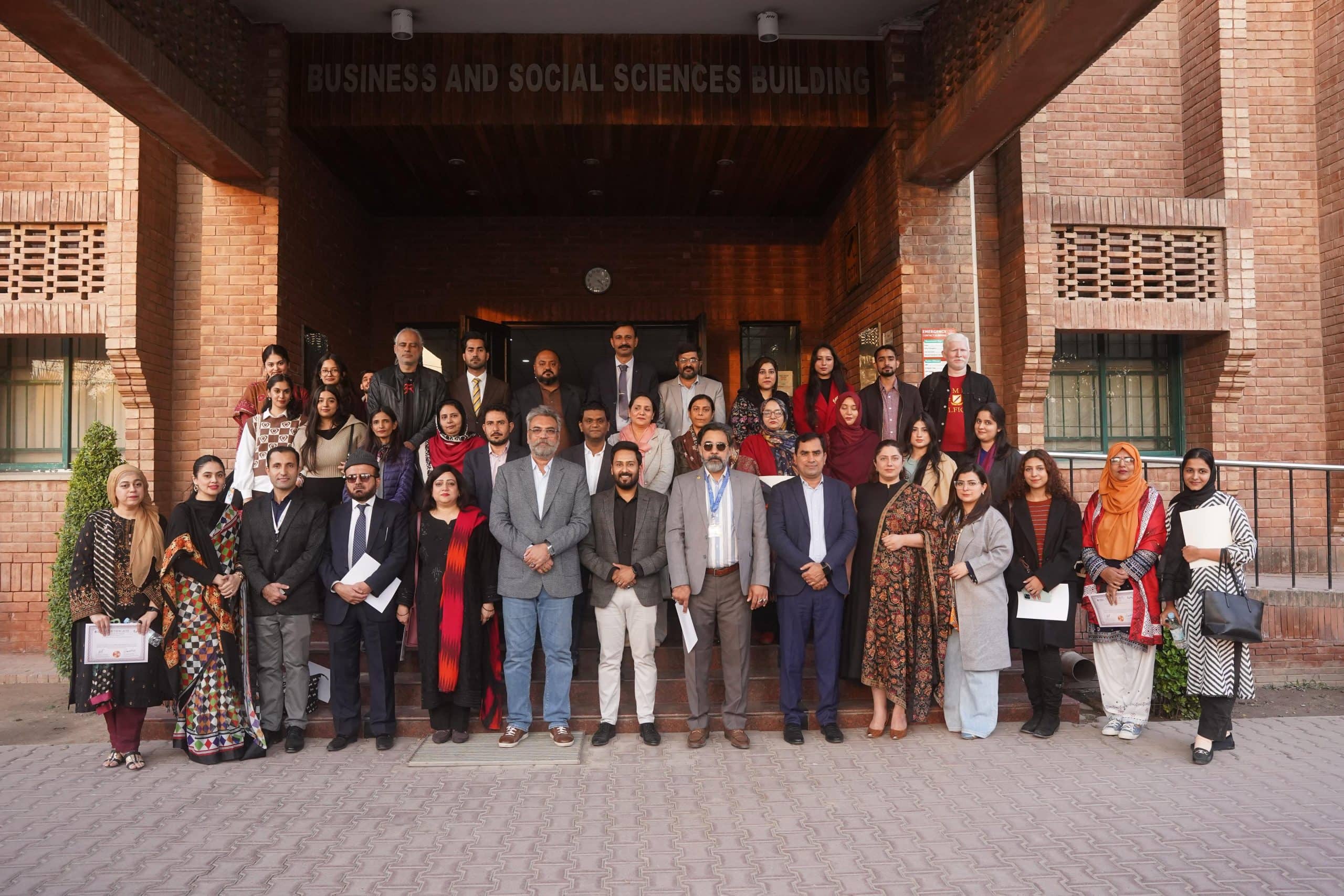
The TOT concluded with Part 2 of Ms. Abeer Saady’s methodology training, where participants presented their own safety training modules. Ms. Saady provided live feedback from Germany, while Dr. Saqib facilitated the simulation exercise on site. The workshop ended with a closing tea and certificate distribution ceremony.
The TOT workshop forms part of the long-standing academic partnership between FCCU and JMIC aimed at equipping journalists and educators with the tools needed to navigate Pakistan’s shifting media and security landscape. Through collaborative learning, scenario-based activities, and expert-led sessions, the workshop reaffirmed FCCU’s commitment to fostering responsible, ethical, and safety-conscious journalism in Pakistan.
About the Author