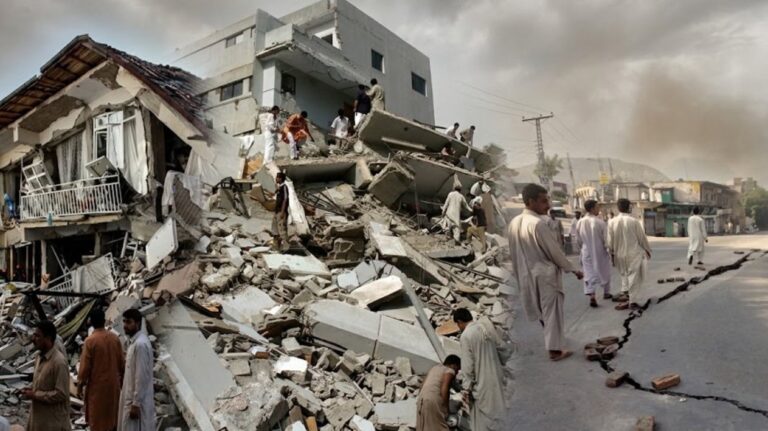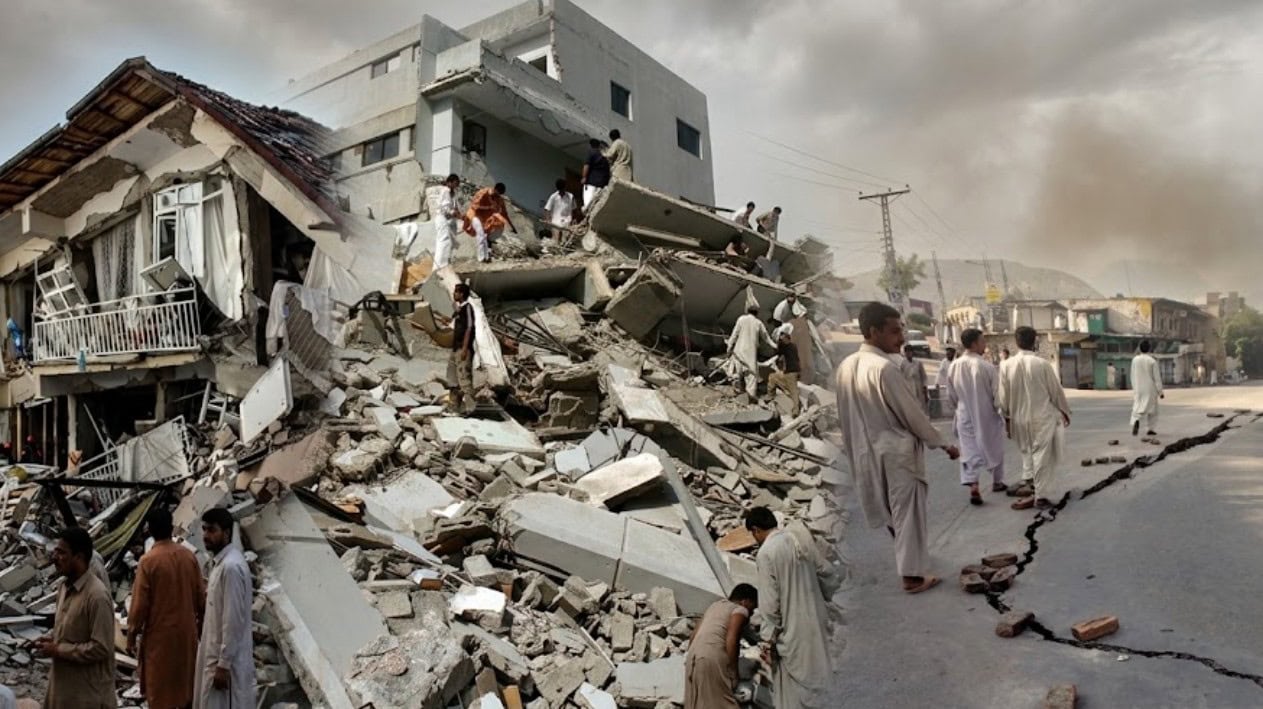
MUZAFFARABAD — 21 years have passed, but October 8, 2005, remains a day Pakistan has not forgotten. A magnitude 7.6 earthquake tore through Kashmir and parts of Pakistan, killing tens of thousands and leaving millions to rebuild their lives from the ruins.
At around 8:50 am on October 8, 2005, the strong earthquake struck near Muzaffarabad in Azad Jammu and Kashmir. What followed was one of the deadliest natural disasters in South Asia’s recent history. The destruction stretched across roughly 30,000 square kilometres, striking Azad Kashmir, Khyber Pakhtunkhwa and parts of Indian-administered Kashmir, with tremors also felt in Afghanistan.
8 اکتوبر 2005 کے تباہ کن زلزلے کے شہداء کی یاد میں آزاد کشمیر کے دارالحکومت مظفرآباد کے نلوچی برج پر ضلعی انتظامیہ، شہریوں اور بچوں نے جمع ہو کر شمعیں روشن کیں۔ یہ تقریب شہداء کو خراجِ عقیدت پیش کرنے اور اس عزم کو دہرانے کے لیے منعقد کی گئی کہ قوم انہیں کبھی فراموش نہیں کرے گی، جبکہ اس موقع پر شہداء کی مغفرت اور ملک کو ناگہانی آفات سے محفوظ رکھنے کے لیے خصوصی دعا بھی کی گئی۔ #8Oct
— Kashmir Vibes (@kashmirvibes33) October 8, 2026
In Pakistan, official estimates put death toll at roughly 73,000 to 87,350, with most widely cited figures settling around 86,000–87,000 deaths. More than 100,000 people were injured, according to varying estimates, while approximately 2.8 to 3.5 million people were left homeless.
Another 1,300–1,360 people were killed in Indian-administered Kashmir, pushing the broader regional death toll toward the 100,000 mark in some estimates. Among most haunting images of disaster were collapsed schools. Around 19,000 children and teachers were reported killed when school buildings came crashing down.
Entire communities disappeared beneath concrete, stone and earth. Landslides buried roads and settlements, while destroyed bridges and mountain passes cut off thousands of survivors from emergency assistance.
Balakot was almost wiped out. Muzaffarabad suffered catastrophic destruction. Across the affected region, approximately 780,000 buildings were destroyed or severely damaged, including homes, schools, hospitals and public infrastructure.
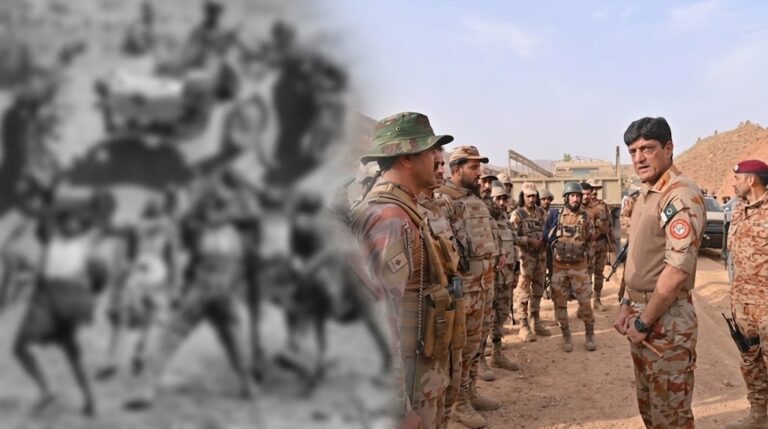
For survivors trapped beneath the rubble, the first hours were a desperate race against time. Pakistan Army rapidly mobilised troops, engineers, medical personnel and aviation units. Helicopters became lifelines, evacuating the injured and delivering food, tents, medicines and other emergency supplies to isolated mountain communities.
Army engineers worked to clear roads blocked by landslides, while soldiers searched collapsed buildings and established relief camps.
Within several days, some reports put the military deployment at 40,000–50,000 personnel. The Army Medical Corps, engineers, and aviation units became central to the emergency response, particularly in areas where damaged roads made conventional relief operations nearly impossible.
For many survivors in remote mountainous villages, military helicopters and relief convoys were among the first signs that help had finally arrived. But the story of the rescue was never solely a military one.
The scale of the devastation quickly triggered a massive international relief operation. UN, NATO, and other countries sent helicopters, medical teams, engineers, emergency supplies and logistical assistance. NATO alone provided thousands of tonnes of supplies and engineering support.
Local communities, civil-society groups, charities and NGOs also mobilised in extraordinary numbers, often reaching areas where formal relief operations struggled to arrive. The disaster demonstrated both the importance of organised emergency response and the enormous logistical challenges posed by Pakistan’s mountainous terrain.
The earthquake prompted one of Pakistan’s largest reconstruction efforts. The government established the Earthquake Reconstruction and Rehabilitation Authority (ERRA) to oversee the massive recovery programme. The World Bank and Asian Development Bank estimated reconstruction and recovery needs at approximately $5.2 billion.
Schools and hospitals were rebuilt. Roads and bridges were reconstructed. Communities began the long process of rebuilding homes and livelihoods. Yet reconstruction could not erase the human cost. For thousands of families, the earthquake meant the permanent loss of parents, children, teachers, relatives and entire communities.
The earthquake also changed the way Pakistan approached disaster preparedness. The scale of the catastrophe intensified calls for stronger building standards, earthquake-resistant construction, emergency planning and better coordination between civilian and military institutions.
The experience contributed to greater emphasis on national disaster-management structures, including the National Disaster Management Authority (NDMA). The disaster produced unusual political and social developments. India and Pakistan temporarily opened several crossing points to facilitate humanitarian assistance and movement across the divided region.
Even militant and religious groups became involved in relief activities, adding another complicated dimension to the post-earthquake landscape.
Today, on the 21st anniversary, memorial ceremonies and prayers are being held across affected communities as Pakistan remembers those lost on that October morning. For the country, the 2005 earthquake is no longer simply a figure in a disaster report.
About the Author