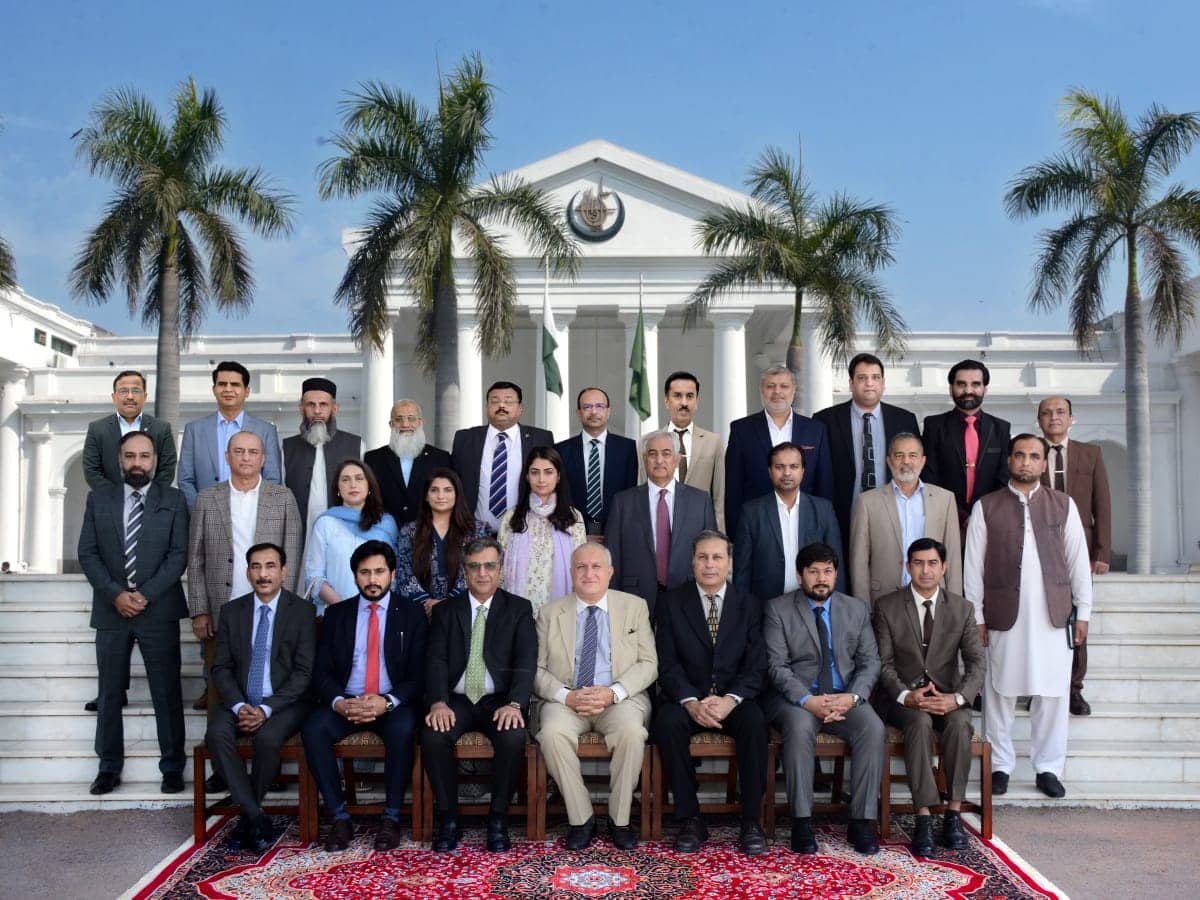
LAHORE – The Executive Development Institute (EDI) of the National School of Public Policy (NSPP) held the fourth edition of its three-day Directors’ Training Programme (DTP) for state-owned enterprises from April 21 to 23.
The programme, approved by the Securities and Exchange Commission of Pakistan (SECP), was attended by 17 participants drawn from federal and provincial civil services as well as the private sector.
Participants represented a range of organisations, including the Pakistan Atomic Energy Commission, Pakistan Agricultural Storage and Services Corporation Limited (PASSCO), Pakistan Horticulture Development and Export Company, Pakistan Industrial Development Corporation, GHQ Rawalpindi, POF Wah Cantt, Tijarat Worldwide, Abid Ali & Associates, Big Bird Foods, Punjab Mineral Development Corporation and the Bank of Punjab.
Rector NSPP Farhan Aziz Khawaja, addressing the opening session, said the initiative aimed to strengthen corporate governance practices in Pakistan. He highlighted NSPP’s role in promoting cross-sector collaboration and described the SECP-backed programme as a step towards setting higher standards in governance training. He urged participants to uphold transparency and accountability in their respective organisations.
EDI Dean Dr Naveed Elahi said the programme was designed to improve governance and performance in state-owned enterprises through effective leadership. He noted that the curriculum covered legal responsibilities, board effectiveness, risk management and ethical governance, supported by case studies and simulations.
The training featured sessions by speakers including Dr Sohail Naqvi, Dr Ishrat Hussain, Kashif Ahmad Noor, Ahmad Nazir Warraich, Dr Irum Saba, Muhammad Anwar Sheikh, Mairaj A. Ariff, Dr Shujat Ali, Imtiaz Mahmood, Tariq Bajwa and Dr Mohammad Jehanzeb Khan.
Topics covered included corporate governance principles, SOE reforms, board structure, financial risk governance, business planning, directors’ roles and liabilities, public service obligations, cybersecurity, conflict of interest, reporting and disclosure, and audit mechanisms.
In his closing remarks, the rector appreciated participants’ engagement and acknowledged the efforts of the EDI team. Certificates were distributed among participants at the end of the programme.
About the Author